
In the global Internet of Things (IoT) and embedded fields, ESPRESSIF Systems has become a benchmark enterprise for wireless RF chips with extreme integration, excellent wireless performance and an open ecosystem. Founded in 2008, ESPRESSIF has focused on the R&D of Wi-Fi, Bluetooth and other wireless communication technologies, and specialized in the design of Xtensa® and RISC-V architecture MCUs. It has created two core chip series, ESP8266 and ESP32, covering consumer electronics, industrial control, smart home, smart wearables and other fields. It provides cost-effective and reliable wireless connection solutions for millions of developers worldwide, promoting the popularization and intelligent upgrading of IoT devices. Today, ESPRESSIF chips have become one of the first choices for IoT project R&D, and their complete development toolchain (ESP-IDF) and rich technical support have greatly lowered the development threshold for wireless products.
With the core advantages of "high integration, low power consumption and strong performance", ESPRESSIF wireless RF chips have various models precisely adapted to different scenarios, covering everything from entry-level low-cost solutions to high-end complex applications. Below is an analysis of all models by series, including their characteristics and applicable scenarios, along with practical application skills to help projects land efficiently.
The ESP32-S3 series adopts the Xtensa® 32-bit LX7 dual-core processor with a maximum frequency of 240MHz, supporting 2.4GHz Wi-Fi 4 and Bluetooth 5 (LE). It has built-in vector instructions to accelerate neural network computing and signal processing, equipped with 512KB SRAM and 384KB ROM, and supports external Flash and PSRAM expansion. It is the main model for mid-to-high-end IoT devices.
ESP32-S3: Basic chip without built-in Flash/PSRAM, requiring external storage. It is suitable for industrial equipment and smart hardware with custom storage capacity, supporting 45 programmable GPIOs and rich peripherals such as MIPI-CSI and USB 2.0 OTG.
ESP32-S3R8: Chip model integrated with 8MB PSRAM (no built-in Flash), focusing on high-memory demand scenarios such as image recognition and voice processing devices, suitable for solution development requiring storage flexibility.
ESP32-S3-WROOM-1-N16R8: Modular package integrated with 16MB Flash (N16) and 8MB PSRAM (R8), adopting PCB antenna. As the mainstream configuration of this series, it is suitable for smart cameras, AIoT gateways and high-end wearables, balancing performance and stability.
ESP32-S3-WROOM-1-N8R8: Equipped with 8MB Flash and 8MB PSRAM, with PCB antenna design. It is suitable for projects with moderate storage needs and cost sensitivity, such as smart controllers and environmental monitoring terminals.
ESP32-S3-WROOM-1-N16R2: Equipped with 16MB Flash and 2MB PSRAM, balancing performance and cost. It is suitable for scenarios without complex data processing, such as smart door locks and wireless sensor nodes.
ESP32-S3-WROOM-1U-N16R8: Upgraded to IPEX external antenna interface based on N16R8 configuration, with longer signal transmission distance and stronger anti-interference ability, suitable for complex wireless environments such as industrial IoT and outdoor monitoring.
ESP32-PICO-MIN1-02-N8R2: Ultra-small LGA package (7x7mm), integrated with 8MB Flash and 2MB PSRAM, with low-power design. It is suitable for space-constrained micro devices such as smart bracelets, micro sensors and wearable medical devices.
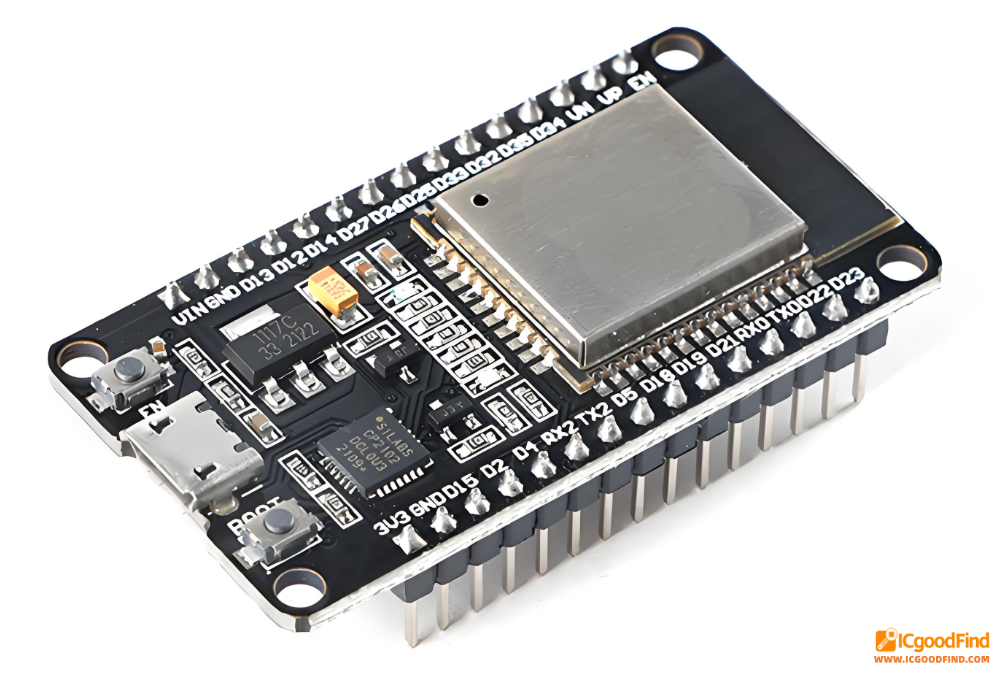
As ESPRESSIF’s core product line, the ESP32 series adopts Xtensa® 32-bit dual-core/single-core processor, supporting 2.4GHz Wi-Fi and Bluetooth 4.2 (LE). It integrates rich peripherals, adapting to a wide range of scenarios from consumer electronics to industrial control, with mature technology and improved ecosystem.
ESP32-WROOM-32: Classic basic module integrated with 4MB Flash (no PSRAM) and PCB antenna. It is suitable for entry-level IoT devices such as smart light controls and simple sensors, with outstanding cost performance and high market ownership.
ESP32-WROOM-32E: Upgraded module with optimized wireless performance and stability, supporting Flash expansion (no built-in PSRAM). It is suitable for consumer electronics with high requirements for wireless reliability, such as smart home central controls.
ESP32-WROOM-32E-N4: Equipped with 4MB Flash (N4), inheriting the wireless performance of WROOM-32E. It is suitable for low-cost, small-storage scenarios such as smart sockets and remote control devices.
ESP32-WROOM-32E-N8: Equipped with 8MB Flash, balancing storage and cost. It is suitable for devices needing to store more firmware and data, such as smart speakers and small gateways.
ESP32-WROOM-32E-N16: Configured with 16MB Flash, meeting the needs of large firmware and multi-data storage, such as devices with local voice recognition and offline data collection terminals.
ESP32-WROOM-32D: Differentiated by optimized Bluetooth protocol, supporting classic Bluetooth and BLE dual-mode. It is suitable for scenarios requiring Bluetooth data transmission, such as wireless keyboards and Bluetooth gateways.
ESP32-WROOM-32D-N4: Equipped with 4MB Flash and dual-mode Bluetooth, suitable for low-cost Bluetooth + Wi-Fi dual-mode devices such as smart remote controls and short-distance data transmission terminals.
ESP32-WROOM-32U: Equipped with USB interface, supporting USB communication and power supply, integrated with 4MB Flash. It is suitable for devices needing direct connection to computers, such as USB wireless network cards and portable debugging tools.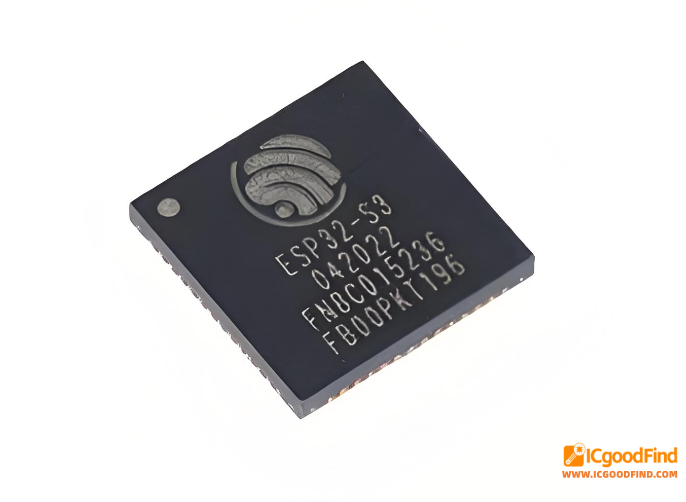
ESP32-WROOM-32UE-N4: Optimized power consumption and stability on the basis of WROOM-32U, configured with 4MB Flash. It is suitable for industrial-grade USB IoT devices such as industrial data collection modules.
ESP32-WROOM-32-N4: Derivative of the basic model, with 4MB Flash and no Bluetooth dual-mode function, focusing on Wi-Fi connection. It is suitable for projects with minimal cost requirements, such as simple wireless sensors.
ESP32-WROVER-E: High-end module supporting external PSRAM and optimized RF performance. It is suitable for devices needing high memory and strong wireless signals, such as smart cameras and industrial gateways.
ESP32-WROVER-E-N8R8: Integrated with 8MB Flash and 8MB PSRAM, with IPEX external antenna. It is suitable for image processing and large data caching scenarios such as AI vision devices and high-definition cameras.
ESP32-WROVER-E-N16R8: Configured with 16MB Flash + 8MB PSRAM and external antenna, it is the first choice for high-end industrial applications such as industrial automation control terminals and edge computing nodes.
ESP32-PICO-D4: Ultra-small LGA package (5x5mm), integrated with 4MB Flash (no PSRAM), with low-power design. It is suitable for space-constrained micro devices such as smart wearables and micro sensor nodes.
ESP32-D0WD-V3: Dual-core processor chip without built-in Flash/PSRAM, supporting external storage and rich peripherals. It is suitable for industrial-grade customized solutions such as industrial controllers and embedded gateways.
ESP32-D0WDQ6: Single-core chip with higher cost performance and no built-in storage. It is suitable for industrial and consumer scenarios with moderate computing power requirements, such as simple control modules and wireless data forwarding devices.
The ESP32-C3 series adopts RISC-V 32-bit single-core processor with a frequency of 160MHz, supporting 2.4GHz Wi-Fi 4 and Bluetooth 5 (LE). With the core advantages of low cost, low power consumption and small package, it is an ideal choice for entry-level IoT and battery-powered devices.
ESP32-C3: Basic chip without built-in Flash/PSRAM, the RISC-V architecture brings extremely low cost, suitable for low-cost solutions with custom storage such as mass-produced simple sensors.
ESP32-C3FH4: Integrated with 4MB Flash, QFN package without antenna integration. It is suitable for customized devices needing external antennas, such as small wireless gateways and battery-powered sensors.
ESP32-C3-MINI-1-H4: Mini module integrated with 4MB Flash and PCB antenna, ultra-small package (4.7x4.7mm). It is suitable for micro IoT devices such as smart buttons and micro monitoring terminals.
ESP32-C3-MINI-1-N4: Configured with 4MB Flash and PCB antenna (correcting the typo "MIN-1" in the original model). It is suitable for low-cost, small-size scenarios such as smart lights and simple controllers.
ESP32-C3-MINI-1U-N4: Equipped with 4MB Flash and IPEX external antenna interface, balancing small size and strong signal. It is suitable for outdoor low-power devices such as wireless meter reading terminals and outdoor sensors.
ESP32-C3-WROOM-02-N4: Standard WROOM package, 4MB Flash and PCB antenna, with excellent stability. It is suitable for general scenarios such as smart home and consumer electronics, with strong compatibility.
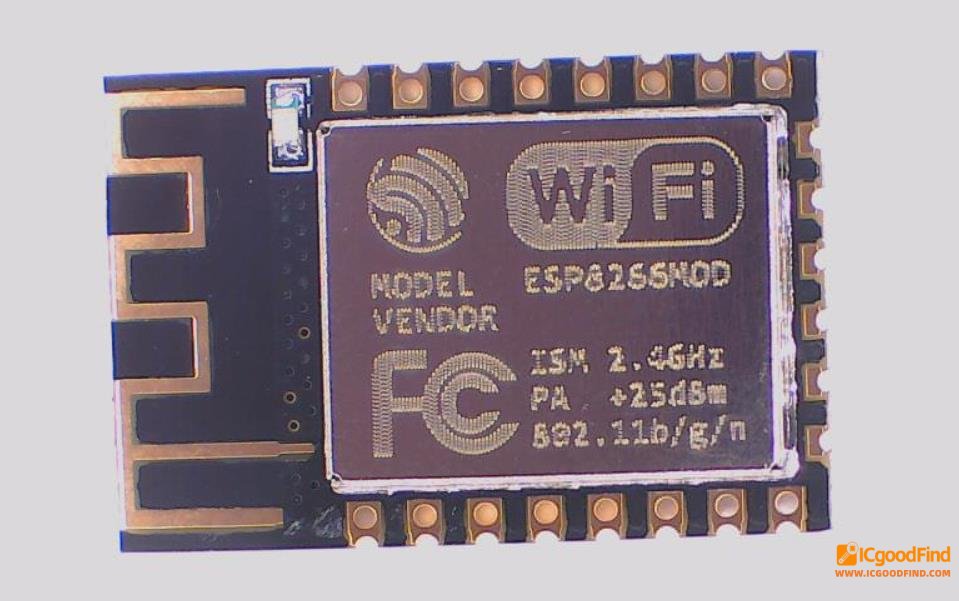
ESP8266EX: ESPRESSIF’s classic Wi-Fi chip, single-core processor, only supporting 2.4GHz Wi-Fi (no Bluetooth function), integrated with 1MB Flash. With low cost and low power consumption, it is the benchmark model for entry-level Wi-Fi devices, suitable for scenarios such as smart lights, smart sockets and simple sensors, with mature ecosystem and extremely low development cost.
ESP-WROOM-02: Modular package based on ESP8266EX, integrated with Wi-Fi function and PCB antenna, with better stability than bare chips. It is suitable for consumer-grade entry-level Wi-Fi devices such as remote control toys and simple IoT terminals.
ESP-PSRAM64H: 64MB external PSRAM chip, suitable for ESP32 and ESP32-S3 series requiring large memory, such as high-definition image processing and massive data caching, providing memory expansion support for high-end industrial devices and AIoT devices.
The peak current of ESPRESSIF chips can reach more than 500mA during RF operation, so power supply design should focus on margin and noise reduction. Prefer DC-DC converters with rated current of 1A or more (high efficiency and low heat generation); LDO (low noise) can be used in battery-powered scenarios. A 0.1μF high-frequency decoupling capacitor and a 10-22μF energy storage capacitor should be connected in parallel next to each power pin, with an extremely short capacitor grounding path to avoid voltage drop. An additional LC filter circuit is required for analog power pins (such as VDDA) to improve ADC sampling accuracy. The EN pin is recommended to be pulled up to 3.3V through a 10KΩ resistor; an RC delay circuit can be added if power-on timing needs to be controlled.
When using integrated antenna modules, strictly reserve RF clearance (usually ≥20mm²) according to the data sheet, and avoid placing interference sources such as crystals, motors and power lines near the antenna. For external antennas (IPEX interface), select 50Ω impedance feeder to ensure impedance matching and reduce signal reflection. During PCB routing, avoid vias and right-angle routing in the RF area, and use a complete ground plane for the ground wire to improve anti-interference ability. EMC testing should be performed before mass production to optimize grounding and shielding design.
In the development stage, compilation, burning and debugging can be integrated through VSCode + ESP-IDF plug-in; attention should be paid to selecting the corresponding Target according to the chip model (such as ESP32-S3, ESP32-C3). In the mass production stage, ESPRESSIF Flash download tool is recommended, supporting graphical operation and batch burning. When enabling Flash encryption and secure boot, the partition table offset needs to be adjusted to 0xa000 to reserve bootloader space. To enter burning mode, configure according to the chip pin definition (such as pulling GPIO0 low); some development boards can quickly enter through the Boot + Reset key combination. For simple testing, the ESP LAUNCHPAD web tool can be used to quickly burn firmware and verify functions without building an environment.
Select the corresponding low-power mode according to the scenario: ESP32-S3/C3 supports deep sleep mode (current as low as several μA), retaining only RTC clock and wake-up pin. In intermittent working scenarios, the chip can be woken up by a timer and enter sleep immediately after data transmission. Turn off idle peripherals (such as SPI, UART) and GPIO pull-up/down, optimize Wi-Fi/Bluetooth communication timing, and reduce RF working time. For battery-powered devices, prefer ESP32-C3 or ESP8266 series, combined with low self-discharge batteries to further extend battery life.
The stable landing of ESPRESSIF chips requires reliable supply chain support. All the above models can be purchased through ICGOODFIND . The platform ensures all chips are original genuine products, with sufficient stock covering the entire series of models and supporting components to meet the immediate needs of R&D sampling. It also provides basic technical selection references to help projects advance efficiently.
